BCI Research
Academic
A research project at UTS exploring whether a fully wireless, portable brain-computer interface could work outside a controlled lab environment.
How it works
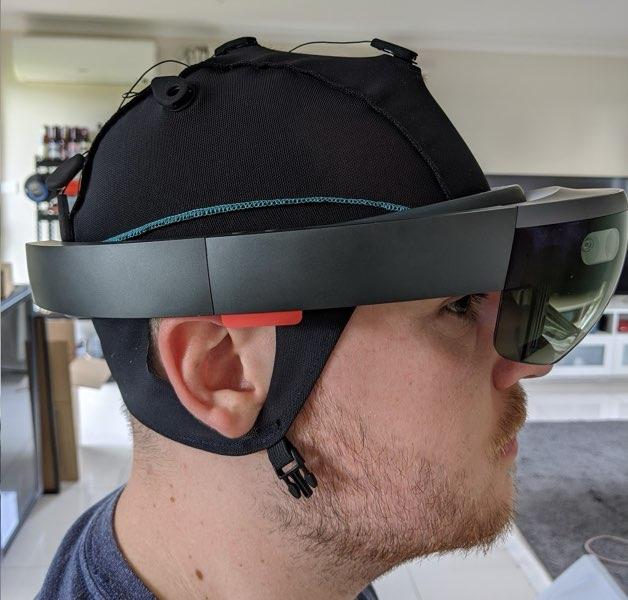
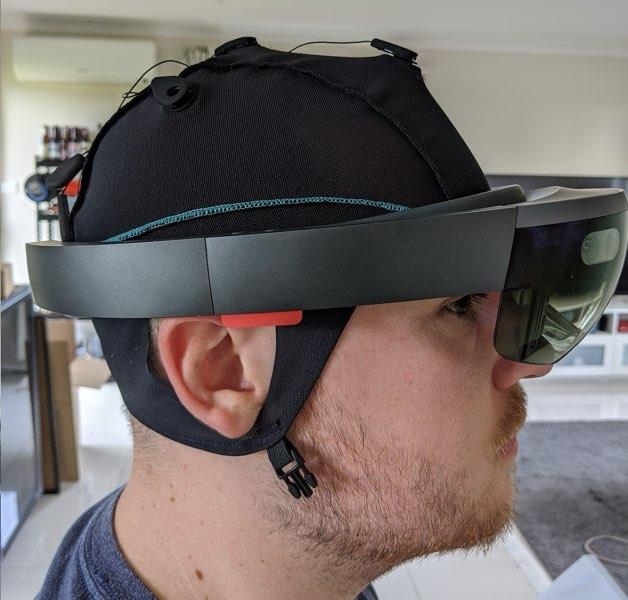
A Microsoft HoloLens presents SSVEP flickering stimuli in augmented reality while a wireless EEG headset captures brain signals. A mobile server analyses the signals in real time and translates them into movement commands for a TurtleBot 3.
Results
Participants navigated the robot to target destinations with 88% per-trial accuracy and 100% task completion. The system worked entirely over wireless connections with near real-time latency.
Why it matters
The key contribution was demonstrating that an AR-based BCI can function in a real-world environment where the user moves freely and interacts with their surroundings — something prior studies had only done under controlled lab conditions. Published at the 2021 IEEE Symposium Series on Computational Intelligence (SSCI).